
Three separate US policy changes are now affecting Malawi at the same time. Here is what each one is, and what it means for the country.
First, a visa bond. Since August 2025, Malawians applying for a US tourist or business visa can be told to pay a deposit of $5,000, $10,000, or $15,000 before the visa is issued. It is refundable if the traveler leaves on time. Malawi and Zambia were the first two countries in the world placed under this rule.
Secondly, partial visa suspension. Since January 2026, a wider US policy has limited visa issuance for Malawi across several categories, including tourist visas, immigrant visas, and, notably, student and exchange visas. This means the policy reaches beyond travelers into students hoping to study abroad.
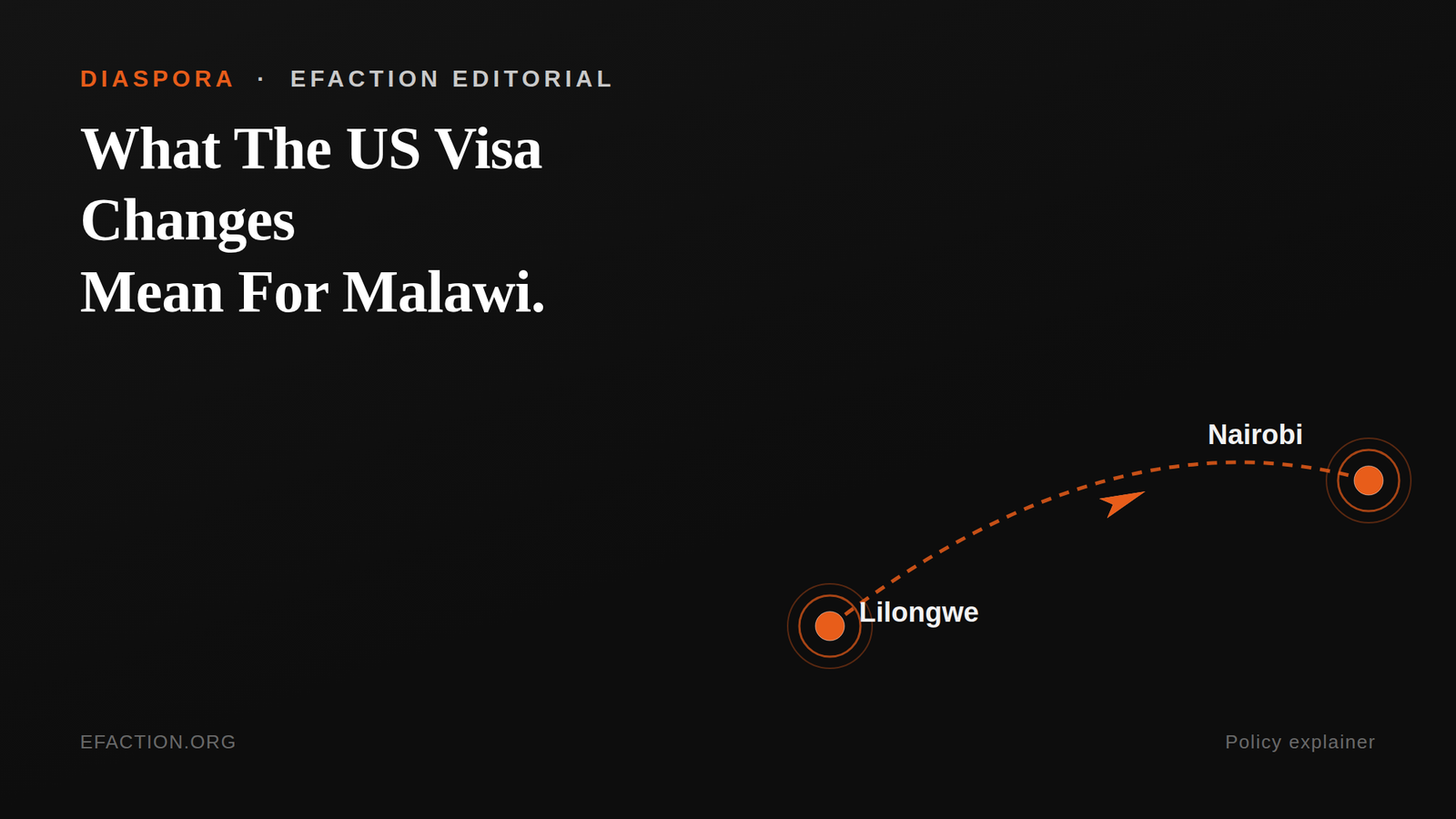
Third, and most recent, an embassy change. From August 2026, routine visa interviews will no longer happen at the US Embassy in Lilongwe. Applicants will need to travel to Nairobi, Kenya instead. This is part of a broader US move cutting the number of embassies handling visas across Africa from around 50 down to 20 regional hubs.
These changes add friction to nearly every form of legal movement between Malawi and the United States, tourism, business travel, and education. Fewer people applying, and more of those who do facing added cost and delay, tends to mean less travel overall in both directions.
The timing adds to the concern. These visa changes have followed reductions in US development assistance to Malawi and the cancellation of a major US-funded development program, the Millennium Challenge Corporation's Compact II. Taken together, these developments have raised public questions in Malawi about the direction of the relationship between the two countries.
As of the most recent reporting, the Malawian government had not issued a detailed public response to the visa bond or the embassy change.
Travelers and family visitors face two new costs stacked together: a possible bond of up to $15,000, and the cost of travelling to Nairobi for an interview that used to happen in Lilongwe.
Students are directly affected for the first time under the January 2026 policy, since student and exchange visas are included in the suspension. This is separate from cost. It is a change in whether an application can be approved at all, regardless of how well-prepared or funded a student is.
Entrepreneurs and business travelers face the same bond costs, plus the standard 90-day limit on a tourist visa, which complicates longer or repeat business trips.
Governments facing this kind of policy shift typically have a limited but still valid set of options:
- Government-to-government talks can seek exemptions, phased timelines, or clearer criteria for who is affected, even where the underlying US policy is unlikely to be reversed quickly.
- A public, practical guide from the Malawian government on what has changed and how to prepare would fill a real information gap for ordinary applicants right now.
- This could include facilitating travel to Nairobi, or working with Kenya on smoother handling of Malawian applicants at the regional hub.
- Strengthening travel, education, and business ties with other partners, regionally or internationally, reduces how much these changes can affect the country over time.
Relations remain formally intact, but recent developments, reduced aid, the cancelled Compact II program, and now these layered visa restrictions, point toward a cooler and more distant relationship than in previous years. Neither government has described the relationship as broken, but the practical experience for an ordinary Malawian right now is one of things becoming harder, slower, more expensive or all three at once.